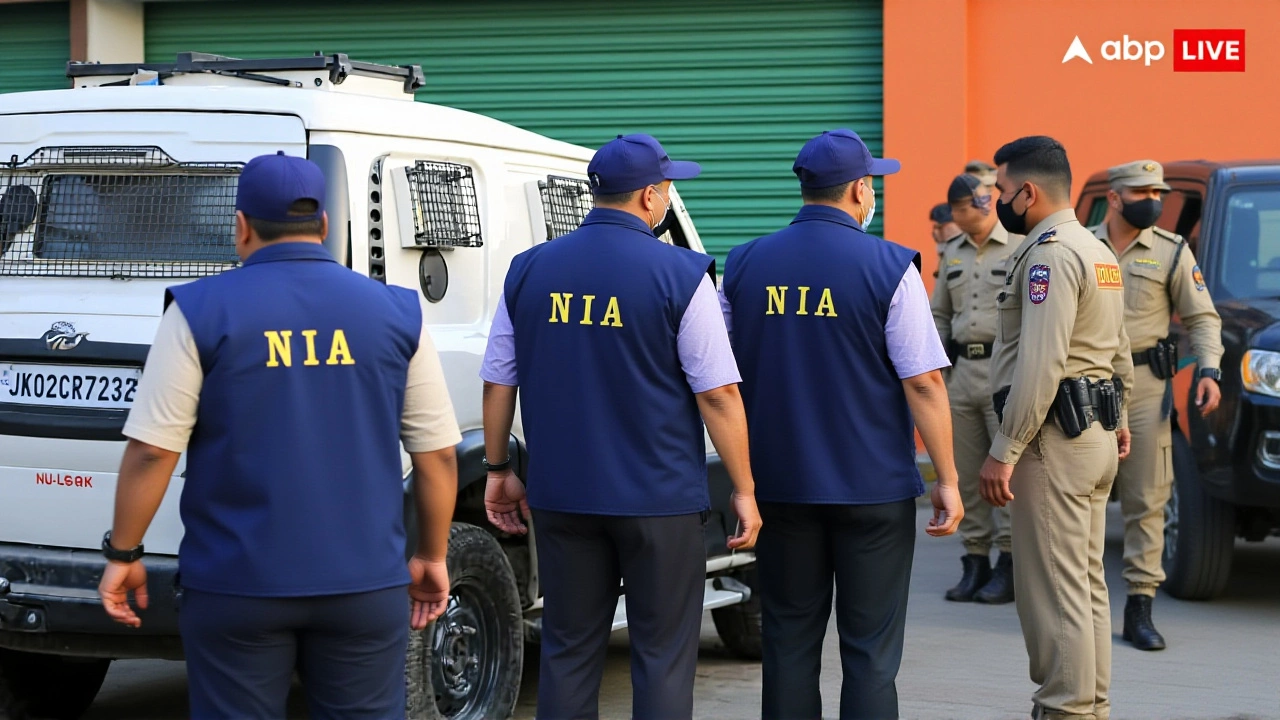
The National Investigation Agency (NIA) has filed a chargesheet against nine individuals for the grenade attack on a women’s police station in Sirsa, Haryana, India. Filed in the special NIA court in Panchkula, the document alleges an international conspiracy involving two Pakistani nationals as masterminds.
Here’s the thing: this wasn’t just a local crime. The agency is framing it as part of a broader strategy to spread terror across India, linking local recruits to handlers abroad via social media and foreign funding. It’s a significant escalation from the initial reports that emerged late Tuesday night, November 25, 2025.
The Night of the Attack
It happened late at night on November 25, 2025. Two men attempted to throw a grenade into the women’s police station in Sirsa. Fortunately, the device didn’t go inside. It exploded outside the wall, sparing potential casualties but sending shockwaves through the community.
Deepak Saharan, a police official, explained the immediate aftermath. "Five accused were arrested initially," he said. Four were from Khariya village in Sirsa district, and one was a resident of Sirsa city. Interestingly, three of these five had prior criminal records. This suggests the perpetrators weren’t random strangers; they had history.
The forensic science laboratory (FSL) team arrived quickly to examine the explosive remnants. They’re still analyzing the specific composition of the explosive material, but early evidence pointed toward a grenade sourced from Amritsar, Punjab. That detail matters because it shows pre-planning and logistics, not a spur-of-the-moment act.
Uncovering the Conspiracy
But wait—the story gets deeper. The NIA’s investigation revealed that the attack was orchestrated by a network extending beyond India’s borders. According to the chargesheet, Shahzad Bhatti and Sohel Ahmad alias Sohel Baloch, both Pakistani nationals, are identified as the masterminds.
Shahzad Bhatti actually claimed responsibility for the attack on social media shortly after it occurred. His video went viral, showing a clear attempt to intimidate and assert control. The NIA notes that all accused were in regular contact with foreign handlers, receiving instructions from abroad. This isn’t just about violence; it’s about coordination.
On the ground in India, Dheeraj alias Dheeru played a pivotal role. He acted as the main coordinator for the operation within India. He built the local module, connected the dots between the foreign handlers and the local recruits, and ensured the plan moved from theory to execution. Other Indian nationals named in the chargesheet include Vikas alias Vikki, Sandeep alias Demar, Sushil alias Sillu, Mohammad Sizan alias Gazi, and Gurjant Singh.
How They Were Recruited and Funded
The twist is how modern terrorism operates now. The NIA report highlights the use of social media for recruitment. Handlers used digital platforms to identify and radicalize individuals, pulling them into the network. It’s a chillingly efficient method: no face-to-face meetings needed for initial contact.
Funding also came from abroad. While exact amounts aren’t detailed in public reports yet, financial transactions linked to the suspects have been traced. Police found suspicious money flows when examining the details of the arrested individuals. This foreign funding is crucial—it proves the infrastructure behind the attack wasn’t self-financed locally.

Legal Implications and Next Steps
The legal stakes are high. The NIA has invoked serious laws: the Unlawful Activities (Prevention) Act (UAPA), the Bharatiya Nyaya Sanhita (BNS), and the Explosive Substances Act. UAPA is India’s primary anti-terror law, making planning, financing, or supporting terrorism a severe offense. BNS covers attempts to murder and criminal conspiracy. The Explosive Substances Act penalizes illegal possession and use of explosives.
This combination of laws signals the government’s intent to treat this as a national security threat, not just a local crime. The trial will proceed in the special NIA court in Panchkula. Prosecutors will need to prove the link between the Pakistani handlers and the Indian operatives beyond reasonable doubt. Digital evidence, financial trails, and witness testimonies will be key.
What’s next? Security around police stations and public institutions in Haryana is likely to be tightened. Intelligence agencies will monitor social media more closely for similar recruitment patterns. For the families involved and the local community, the psychological impact remains. A grenade attack on a women’s police station sends a message of fear. But catching the conspirators sends a message of resilience.
Frequently Asked Questions
Who are the masterminds behind the Sirsa grenade attack?
The NIA identifies two Pakistani nationals, Shahzad Bhatti and Sohel Ahmad alias Sohel Baloch, as the masterminds. They allegedly planned the attack from abroad, using social media to recruit locals and providing foreign funding.
Why was the NIA involved instead of local police?
The case involves cross-border elements, including Pakistani nationals and foreign funding. Such complexities fall under the jurisdiction of the National Investigation Agency, which handles terrorism and national security threats.
What laws are being used to prosecute the accused?
The chargesheet invokes the Unlawful Activities (Prevention) Act (UAPA), the Bharatiya Nyaya Sanhita (BNS), and the Explosive Substances Act. These laws cover terrorism, conspiracy, and illegal use of explosives.
Did anyone get injured in the attack?
Fortunately, no major injuries were reported. The grenade exploded outside the wall of the women’s police station rather than inside, preventing potential casualties among staff and visitors.
How were the local recruits contacted?
The NIA report states that social media platforms were used for recruitment. Foreign handlers communicated with local operatives digitally, avoiding physical meetings until necessary stages of the plot.